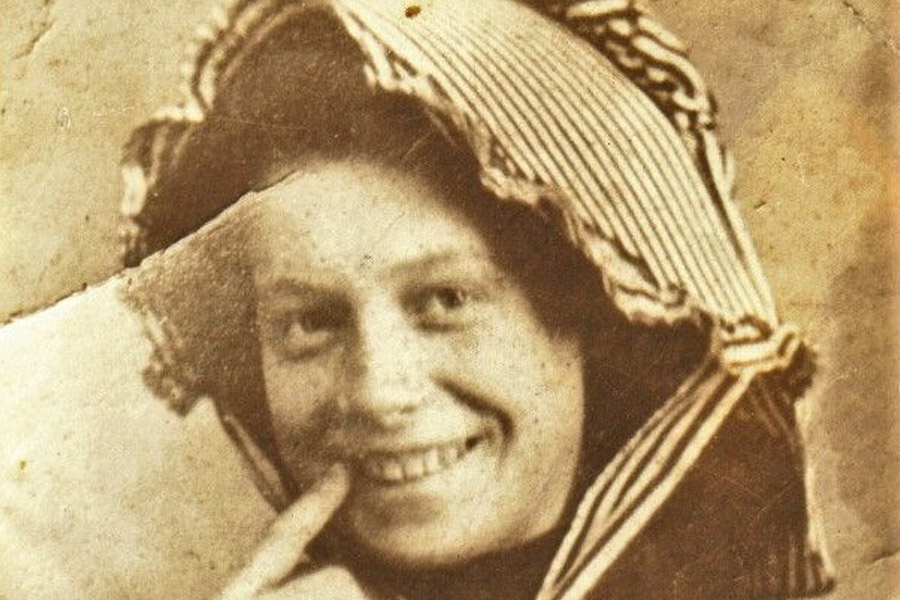
A life lived beside a larger story
When I look at Gertrude Trammell, I do not see a life that asks for a spotlight. I see something more durable, a lantern carried through a long hallway. Her name is threaded through a famous family story, but she was never the center of the spectacle. That is exactly what makes her important.
Gertrude Trammell was born in 1905 and lived until 2000, a span wide enough to catch horse and buggy days, radio, television, and the first glow of the digital age. She stands in the record as a sister, a wife, a daughter, a resident of Greenville, South Carolina, and a witness. Those roles can sound ordinary until one realizes how often history depends on ordinary people who remember accurately, remember patiently, and remember long after the headlines have moved on.
Why quiet relatives matter in public history
Public history often behaves like a theater stage. One person gets the light, and everyone else becomes backdrop. But family history does not work that way. It is more like a woven rug. Pull one thread and the pattern shifts. Gertrude Trammell was one of those threads.
Her brother, Joseph Jefferson Jackson, became a towering figure in baseball lore, and that fame cast a shadow long enough to reach later generations. Yet the people who actually preserve a family story are often the ones who never sought applause. They are the keepers of names, dates, habits, and small truths that do not seem glamorous until they disappear. Gertrude lived in that role. She did not need a podium to matter. She carried memory in the way some people carry water, carefully and without wasting a drop.
There is a human honesty in that. Not every life becomes a monument. Some become bridges.
The Jackson family as a living map
The Jackson family itself is a map of Southern kinship, labor, and survival. It stretches across siblings, marriages, cemetery stones, and local recollection. In any large family, the public memory tends to compress people into a few labels. One becomes the star. Another becomes the cautionary tale. Another becomes the one who stayed. Gertrude Trammell resists compression.
She belongs to a generation that watched older forms of life begin to vanish. Mill towns changed. Work changed. Transportation changed. The family names remained, but the world around them was rebuilt piece by piece. In that kind of setting, a person like Gertrude becomes a kind of human ledger. She holds the account open when others are ready to close the book.
I find that compelling because it restores scale. A family is not just the most famous member. It is a network of births, marriages, losses, and long years of ordinary labor. It is the sound of a kitchen, the repetition of a surname, the way a story gets told twice in one room and then carried elsewhere in a slightly different form.
Greenville and the long memory of place
Greenville, South Carolina, matters in this story as more than a backdrop. Places do something to memory. They press it into shape. A city changes around a person, but it also preserves traces of what came before. Streets, houses, burial grounds, and neighborhood names become storage vessels for the past.
Gertrude Trammell lived most, and perhaps all, of her life in that setting. That matters because local history is often built not from one grand archive, but from repeated contact with the same landscape. A memory spoken in Greenville can echo against the geography that made it possible. A house, a grave site, a family neighborhood, these are not just coordinates. They are containers.
When a community remembers a famous son, the women and men around him often disappear into footnotes. Gertrude pushes back against that habit. She reminds me that a family does not live only through its most public member. It lives through the people who stayed behind, cared for the frame, and kept the story from drifting apart.
The museum effect and the transformation of family memory
There is something almost alchemical about turning a family home into a museum. A private life becomes public terrain. A front porch turns into an exhibit of shared meaning. A room that once held normal conversation becomes a place where strangers come to look for history. That change alters the role of living relatives in profound ways.
Gertrude Trammell appears in that transition as a witness to the shift from memory inside the family to memory shared with the wider world. That is a delicate passage. Oral history is fragile. It changes with each retelling, but it also keeps details alive that paper records often miss. A date may be fixed in a ledger. A tone, a habit, a family explanation, these live in people.
I think that is where Gertrude becomes most interesting. She represents the point where private memory meets public curiosity. She was not building a brand or a legend. She was supplying context. And context is one of the most underrated forms of power. It turns a name into a person.
A longer view of time
Gertrude Trammell lived long enough to see the meaning of her own era shift. At the start of her life, baseball was becoming a national obsession. By the time she was elderly, the sport had become an industry and a mythology. Her brother’s name had moved from newsprint to folklore. That kind of transformation can flatten the people around the central figure. It can also expose them, because folklore tends to hunger for authentic voices.
A long life has a strange gift. It lets you outlast other people’s certainty. It gives you the chance to hear your own family discussed by strangers and to recognize which pieces ring true. Gertrude’s age gave her a position few people receive: she could connect the age of her brother’s rise to the late twentieth century’s appetite for stories. That is not a small thing. It is a span of memory that crossed from living room recollection into organized preservation.
Her life also shows how history is often carried by women whose names are not written in bold type. They preserve family continuity through marriage, widowhood, domestic labor, and memory work. That work is not ornamental. It is structural. Without it, the larger story leans and cracks.
Gertrude Trammell as a keeper rather than a performer
I keep coming back to the idea of keeping. Gertrude Trammell seems less like a performer in the drama of family legend and more like the person who kept the lamps lit. She held names in place. She held dates in place. She held the family from slipping too far into abstraction.
This kind of role is easy to overlook because it rarely produces a dramatic scene. There is no roaring crowd. There is no championship moment. There is only the steady pressure of remembering. Yet memory, when handled with care, can outlast noise. It can preserve the shape of a life even after the world has turned the story into a headline.
That is why Gertrude matters. She represents the human infrastructure beneath fame. She is the ordinary relative who becomes extraordinary through persistence. Her life suggests that history is not only made by the people on the field or in the front page story. It is also made by the ones who answer questions decades later, who know the family names, who can say, this is who belonged to whom, this is what was true, this is what should not be forgotten.
FAQ
Who was Gertrude Trammell?
Gertrude Trammell was a Greenville, South Carolina resident born in 1905 and remembered as a sister within the Jackson family, the family connected to baseball legend Shoeless Joe Jackson. Her public presence is mostly tied to family memory, local history, and preservation work around that legacy.
Why does Gertrude Trammell matter in the larger family story?
She matters because family history depends on people who preserve detail. Gertrude Trammell helped bridge the gap between lived family memory and the public’s later interest in the Jackson name. That kind of role is quiet, but it is essential.
What makes her story different from a typical biography?
Her story is not built around offices held, inventions, or major public achievements. It is built around continuity. She represents the kind of person whose importance comes from memory, kinship, and the ability to hold a family narrative together across time.
How is Gertrude Trammell connected to baseball history?
Her connection runs through her brother, Joseph Jefferson Jackson, whose baseball career and later scandal became one of the most discussed stories in sports history. Gertrude Trammell’s role is significant because she helped preserve the family perspective around that history.
Why do local historians care about people like Gertrude Trammell?
Local historians care because people like Gertrude Trammell can confirm names, describe relationships, and preserve textures that official records often miss. A historian can gather documents, but a family witness can supply the human grain that makes the documents breathe.
What does her long life tell us about memory?
Her lifespan, from 1905 to 2000, shows how memory can travel across generations. She lived through enormous social change, yet remained a link to the earlier family world that shaped the Jackson story. That makes her both a witness and a vessel.
Is her significance mainly tied to one famous sibling?
No. The famous sibling explains why her name enters public discussion, but her deeper significance lies in the role she played as a keeper of family memory. Fame may open the door, but people like Gertrude Trammell are often the ones who keep the house standing.
Living Well With A European Golden Retriever
A Fresh Look At California Luxury Rehabilitation
How To Choose A Roof That Thrives By The Ocean
Building A Dallas Real Estate Deal That Private Lenders Want To Fund