A private life beside a public world
Michele Correy belongs to the rare category of people who become familiar without becoming exposed. Her name appears beside a well known actor, yet her own story has remained deliberately low in volume. That restraint gives her presence a particular weight. In a culture that often rewards oversharing, Michele Correy stands out by doing the opposite. She seems to move through public life like a candle behind frosted glass, visible enough to notice, softened enough to protect the flame.
Her public identity is tied closely to Bruce Davison, the veteran actor whose work spans film, television, and theater. But Michele Correy is not simply an appendage to that career. The outline of her life suggests a different kind of achievement, one built on privacy, family, and an instinct for keeping what matters close. That choice has shaped how she is understood. Instead of a flood of interviews or a trail of social media posts, there are only scattered appearances, a handful of event photographs, and family moments that surface like shells on a shoreline.
A marriage that settled into family life
Michele Correy married Bruce Davison in 2006, and the timing of their family milestones gave their life together a sense of momentum. Their daughter, Sophia Lucinda Davison, was born not long after the wedding, bringing the household into a new rhythm almost immediately. These details matter because they reveal a home life that seems grounded in kinship rather than performance.
Hollywood relationships are often narrated like fireworks, bright and brief, all glare and aftermath. Michele Correy and Bruce Davison seem to have built something more like a hearth. The image fits the way Correy appears in the public record. She is present, but never theatrical about it. She shows up to premieres, theater events, festivals, and tributes with an ease that suggests support is simply part of the architecture of the marriage. It is not a role she advertises. It is a habit.
Living in Woodland Hills also helps explain the tone of her life. The neighborhood sits close enough to the machinery of entertainment to make attendance at events convenient, but it still offers a measure of quiet. It has the feel of a place where daily routines can remain intact. School schedules, errands, family dinners, and birthdays can go on without being swallowed whole by the industry. For someone like Michele Correy, that balance seems essential.
Public visibility without public appetite
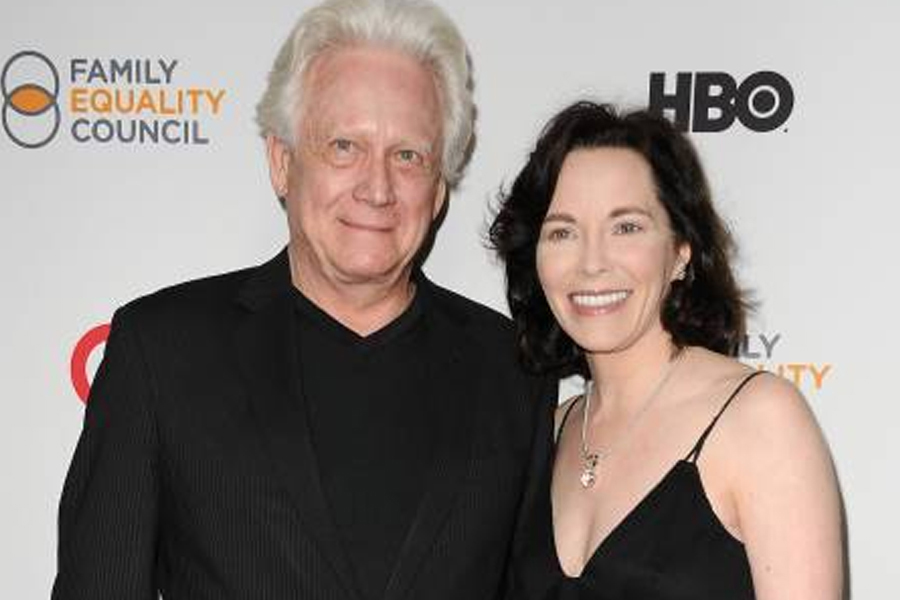
There is a difference between being seen and seeking attention. Michele Correy appears to belong firmly in the first category. Her public life reads like a series of careful footnotes. She is photographed with her husband at select gatherings, sometimes with their daughter, and those images suggest steadiness rather than self-display. Clothing, posture, and expression all point toward understatement. Nothing about the record implies a desire to turn family life into content.
That kind of restraint can be more revealing than constant visibility. A person who refuses to over explain herself often leaves room for a fuller reading. In Michele Correy’s case, the lack of noise tells a story of boundaries. She seems to have drawn a line between personal life and public curiosity, then defended it with consistency. The result is a profile that feels composed rather than empty.
This is especially striking in an era when many public figures build a brand around access. Every lunch, holiday, and vacation becomes material. Michele Correy offers another model. Her life suggests that privacy can still function as a value, not as an accident. Like a garden enclosed by a wall, it does not need the whole world to appreciate it. It only needs the right conditions to grow.
Family as the center of gravity
Family appears to be the center of Michele Correy’s story. The available details point to a household organized around children, spouse, and a steady domestic rhythm. Her daughter Sophia Lucinda has remained mostly outside the glare, which may be the result of careful parenting rather than chance. The same seems true of the broader family structure, which includes Bruce Davison’s son Ethan from a previous marriage. These family ties create a blended household with layered history, but not public spectacle.
That matters because blended families in entertainment circles often become tabloid material. In this case, the tone is different. The family seems to have remained rooted, with little evidence of public conflict or performative drama. Michele Correy’s role in that setting may be invisible from the outside, but invisible is not the same as insignificant. Many families are held together by the people who choose consistency over spotlight. She appears to be one of them.
There is also something quietly modern in the way her family presence is described. She is not framed as a celebrity spouse who has transformed marriage into a media platform. She is presented instead as a mother and partner who has kept the household intact while allowing Bruce Davison’s career to continue in its own orbit. That kind of partnership has its own elegance. It is less trumpet fanfare and more string section, less headline and more pulse.
The shape of a modest professional footprint
Michele Correy is linked to The Conquerors from 2005, though the extent of her involvement is not widely documented. That sparse professional footprint gives her an unusual profile. Many people connected to entertainment try to turn even the smallest credit into a ladder. Correy does not seem to have followed that path. Whatever professional work she may have done, it has not grown into a public career narrative.
That absence invites a different interpretation. Perhaps her life has been organized less around professional visibility and more around chosen commitments. The entertainment world can pull people toward self-promotion like a tide pulling at driftwood. Michele Correy appears to have stayed anchored. Whether by temperament, circumstance, or intention, she has kept her center of gravity elsewhere.
This is part of what makes her interesting. She is not interesting because she is everywhere. She is interesting because she is not. The contrast creates shape. In the bright, reflective world around her, she remains a matte surface, absorbing attention without amplifying it.
Small appearances, lasting impression
When Michele Correy does appear publicly, the effect seems cumulative rather than dramatic. She is seen at openings, festivals, and honors, often beside Bruce Davison. These moments do not build a celebrity persona, but they do create a recognizable pattern. She appears as someone comfortable standing near the frame rather than inside it. That posture becomes its own kind of signature.
The photographs and event notes that do surface suggest a person who is neither distant nor performative. She is present for the occasions that matter. She is part of the family’s public-facing moments without allowing those moments to define her. That balance is difficult to maintain, and perhaps that is why it draws attention. In a room full of people trying to be memorable, quiet composure can feel almost radical.
Michele Correy’s story also carries a useful reminder about how public narratives are built. Not every life worth noticing arrives wrapped in a publicity campaign. Some lives are assembled through constancy, through marriage, through parenthood, through the patience of ordinary days. They are not less meaningful for being less documented. Often they are more durable.
A life measured in choices
Michele Correy’s public profile is shaped less by spectacle than by omission. She has kept her early life, education, and personal details largely outside public view. She has not turned social media into a stage. She has not made herself into a recurring headline. That pattern, repeated over years, becomes a form of expression in its own right.
It says something about priorities. It suggests a person who values home over publicity, continuity over novelty, and discretion over exposure. It also suggests a certain confidence. Not everyone can afford to be private in a public world. To keep one’s life small and intact requires a kind of discipline, a refusal to let every door stand open. Michele Correy seems to have that discipline.
Her story, then, is not one of absence. It is one of deliberate presence on her own terms. She is there in the marriage, there in the family, there in the chosen appearances, there in the quiet support that never asks for applause. Around her, Hollywood continues its bright and restless motion. She remains something steadier, like a well placed stone in a running stream.
Giving Your Fleet Trucks A Second Chance With Refurbished Ecms
The Dig Day Playbook For Keeping Buried Utilities Out Of Trouble
How High Performing Airports Keep The Chaos Moving